The Best Wildflower Hikes in the Great Smoky Mountains
The Great Smoky Mountains are home to more than 1600 species of flowering plants. During each month of the year, some forb, tree or vine is blooming in the Smokies. During the spring, wildflowers explode during the brief window just prior to trees leafing out and shading the forest floor (from about mid-April thru mid-May).
During the early summer period (from about late-May to mid-July), awesome displays of mountain laurel, rhododendron, flame azalea, and other heath family shrub flowers can be enjoyed, especially on the higher elevation balds.
Wet and humid climates, as well as a broad elevation range, are two of the most important reasons for the park's renowned diversity.
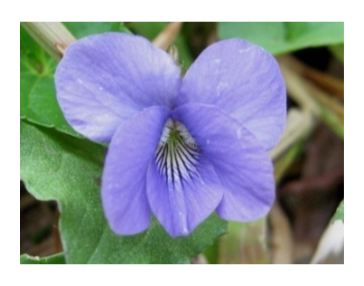 Although there are many parks that are larger, Great Smoky Mountains National Park has the greatest diversity of plants anywhere in North America. In fact, north of the tropics, only China has a greater diversity of plant life than the Southern Appalachians.
The Smoky Mountains contain over 300 rare species of plants, with as many as 125 on the protected plant lists of either North Carolina or Tennessee. Three plant species are protected by the Endangered Species Act, with 12 others currently under review for federal protection.
The following is a list of some of the best hikes in the Smokies for wildflower viewing during the spring season:
Ace Gap - From late April thru early May, look for yellow trillium, beard tongue, Solomon's seal, spiderwort, fire pink, hawkweed, pink lady slippers, Catesby's trillium, yellow mandarin, rue anemone, wild geranium, little brown jugs, Robin's plantain and flame azalea. In May you can expect to find meadow parsnip, sweet shrub, four leaved milkweed, blackberry and star grass. In late May and early June look for fairy wand, false Solomon's seal, galax and Indian pink.
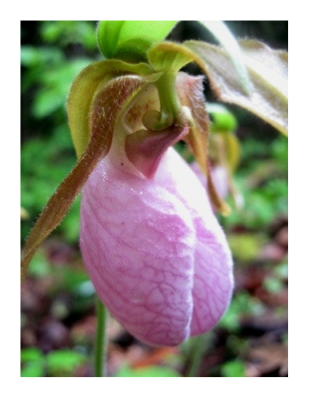 Andrews Bald - Andrews Bald is a good hike to see Catawba rhododendron and flame azalea in June. You may also see small purple-fringed orchids during the summer months. Near the trailhead, we saw thymed leaved bluets during a hike last May.
Bradley Fork Trail - During the early spring season, hepaticas, violets, and foam flower are found on this trail out of Smokemont. As the season progresses, umbrella leaf and Fraser's sedge begin to bloom on the higher elevations of the trail. You can also find wood and rue anemone, Vasey's trillium, beaked violets and crested dwarf iris in April and May. From April through July, look for wild strawberry, Robin's plantain and Canadian violets.
Chestnut Top - Spring beauties are usually the first to bloom on this trail in March. Throughout the spring, you can find white trillium, bloodroot, yellow trillium, hepaticas, violets, Jack-in-the-pulpit, bishop's cap, purple phacelia, fire pink, plantain-leaved pussytoes, star chickweed and wild stonecrop. During the late spring and early summer period, look for hairy beard-tongue, rattlesnake hawkweed and squawroot. Many of these flowers can be found within the first couple hundred feet of the trailhead.
Cove Hardwood Self-Guided Nature Trail - This three-quarter-mile loop trail begins in the Chimneys Picnic Area. Many people say that this is one of the best areas in the park for wildflowers, with the best time being in late April. However, as early as March you can begin to see hepaticas and trout-lilies. Through April and May look for yellow trillium, white fringed phacelia, squirrel corn, wild ginger, white trillium and Dutchman's britches. Solomon's seal arrives in May and lasts through June.
Cosby Nature Trail - Located in the Cosby Campground, this one mile trail passes through several forest types, providing for a variety of wildflowers. Peak months for wildflowers are March and April. Look for Vasey's trillium, squirrel corn, Dutchman's britches, brook lettuce and squawroot. Bleeding heart, showy orchis and Vasey's trillium show-up in April and May.
Deep Creek - Wildflowers are abundant along this trail just outside of Bryson City. You'll find a variety of trilliums blooming at different times, as well as foamflower, galax, crested dwarf iris, beard tongue, Solomon's seal, cinquefoil, bloodroot, bluets and blue-eyed grass. Jack-in-the-pulpit is also abundant, but is sometimes hard to locate among the wild geranium, clinton's lily and large houstonia. As the trail rises in elevation along the Sunkota Ridge and Indian Creek Trails, you'll notice rhododendron, mountain laurel and flame azalea.
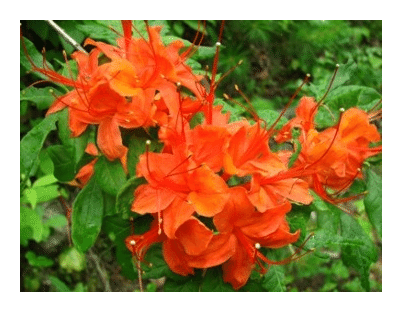 Gregory Bald - Azalea lovers from all over the world come here to visit perhaps the finest display of flame azaleas anywhere on the planet. According to the Great Smoky Mountains Natural History Association, the various hybrids of azaleas on Gregory Bald are so impressive and unique that the British Museum of Natural History has collected samples of them. This place is truly special. In fact, I would go so far as to say that this should be on the life list of any self-respecting hiker, gardener, or nature lover. The best time to visit is usually around mid-to-late June.
Husky Gap - Along the early portions of the Little River Trail we passed several patches of rhododendron during a hike in early May. As we proceeded up river we noticed yellow trillium, dwarf cinquefoil and stonecrop. Roughly half-way between the Little River Trail and Husky Gap we ran into a riot of flowers: yellow, white and painted trillium, blue phlox, hepaticas and violets. There were a couple of hillsides throughout this section of trail that were literally covered in wildflowers. This is a great trail to hike in April and May if your goal is to spot wildflowers.
Kanati Fork - Expect to see early yellow violet as early as March on this trail. By April, you'll begin to see cut-leaved toothwort, dwarf cinquefoil, large-flowered bellwort, white baneberry, Canadian violets, Vasey's trillium, painted trillium, wake robin, Solomon's seal, Northern white violets and brook lettuce. Most of these flowers will last well into May, but the best time to visit is in late April.
Little River Trail - This trail is best hiked between mid-March and April, if you're goal is viewing wildflowers. During the early spring you can expect to see spring beauties and trailing arbutus. As the season progresses, look for hepaticas, yellow trillium, dwarf cinquefoil, stonecrop, Canadian violets and umbrella leaf. You may also see mountain mint, orange and pale jewelweed as early as June here as well.
Porters Creek Trail - This trail is well known for its spectacular wildflower displays from late March through April. During our late-March hike we were treated to a forest floor carpeted with bloodroot, hepaticas, white fringed phacelia, violets and white trillium. As the season progresses into April and May, you can find yellow trillium, toothwort, wild geranium, May-apple, dwarf ginseng, blue phlox, baneberry, foam flower, halberd-leaved violets, woodland bluets and Jack-in-the-pulpits.
Oconaluftee - Late April is the best time for viewing wildflowers along the Oconaluftee River Trail. More than 40 species of wildflowers have been identified along the trail, making it an especially worthwhile walk in spring and fall. During the spring, hikers can find several varieties of trillium and violets, jack-in-the-pulpit, squirrel corn, stonecrop and May apple.
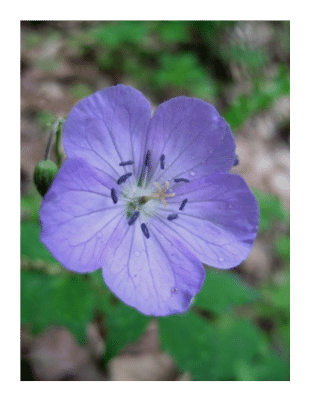 Rich Mountain Loop - This trail had the most diverse amount of wildflowers we've seen in one hike. During our mid-May hike we saw mountain laurel, flame azalea, purple phacelia, rattlesnake hawkweed, yellow ragwort, violets, sweet shrub, wild geranium, blackberry, fourleaf milkweed, everlasting pea and butterfly weed.
Schoolhouse Gap - The Schoolhouse Gap Trail is another excellent trail for spring wildflowers. We saw many Virginia bluebells on the lower portion of the trail. As we proceeded on, we saw beaked violets, pink lady's slippers, fairy wand, golden aster, star grass, red clover, Robin's plantain, sun drops, Catesby's trillium and lyre-leaf sage. The trail also had its share of rhododendron and mountain laurel, which were just beginning to bloom during our mid-May hike. Hikers can also find cardinal flower, Carolina vetch and yellow ragwort on this trail.
Spence Field - Spence Field has the most spectacular display of mountain laurel I've ever seen. The hillsides and meadows were literally covered in the white and soft pink flowers from this member of the heath family. The best time to visit Spence Field is from late May to mid June.
Spring Wildflowers in the Smokies
The following is a list of some of the flowers you can find in bloom throughout the spring season:
March: bloodroot, early meadowrue, Jack-in-the-pulpit, sharp-lobed hepatica, spring beauty, trout-lily, violets.
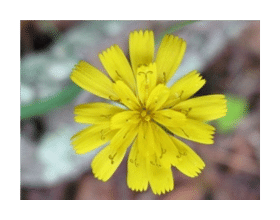 April: columbine, cut-leaved toothwort, crested dwarf iris, dogwoods (mid month), Dutchman's britches, fire pink, foam flower, large-flowered bellwort, little brown jugs, purple phacelia, squirrel corn, trout-lily, violets, white fringed phacelia, white trillium, wild geranium, wild ginger, wood anemone, yellow trillium, yellow mandarin.
May: bleeding heart, blue cohosh, blue phlox, brook lettuce, columbine, creeping phlox, foam flower, Fraser magnolia trees, galax, may apple, meadow-parsnip, painted trillium, purple phacelia, showy orchis, silverbell trees, tuliptrees, umbrella leaf, wake robin, woodland bluet, wood betony, yellow lady's slipper, and at lower elevations, mountain laurel and flame azaleas.
June: Canada mayflower, Catawba rhododendron (primarily above elevations of 3500 feet), false hellebore, flame azaleas at higher elevations, fly poison, galax, goat's beard, Indian pink, mountain laurel at higher elevations, mountain spiderwort, rattlesnake hawkweed, Rosebay rhododendron (primarily in bloom at the lower elevations), speckled wood lily, sundrops, squawroot, wood sorrel, woodland bluets, yellow star grass.
For additional information, check out our list of wildflower field guides in our Amazon affiliated Smoky Mountains store. Click on the "Smoky Mtns Flora" category for various wildflowers guides for the Smokies and Southern Appalachian Mountains.